
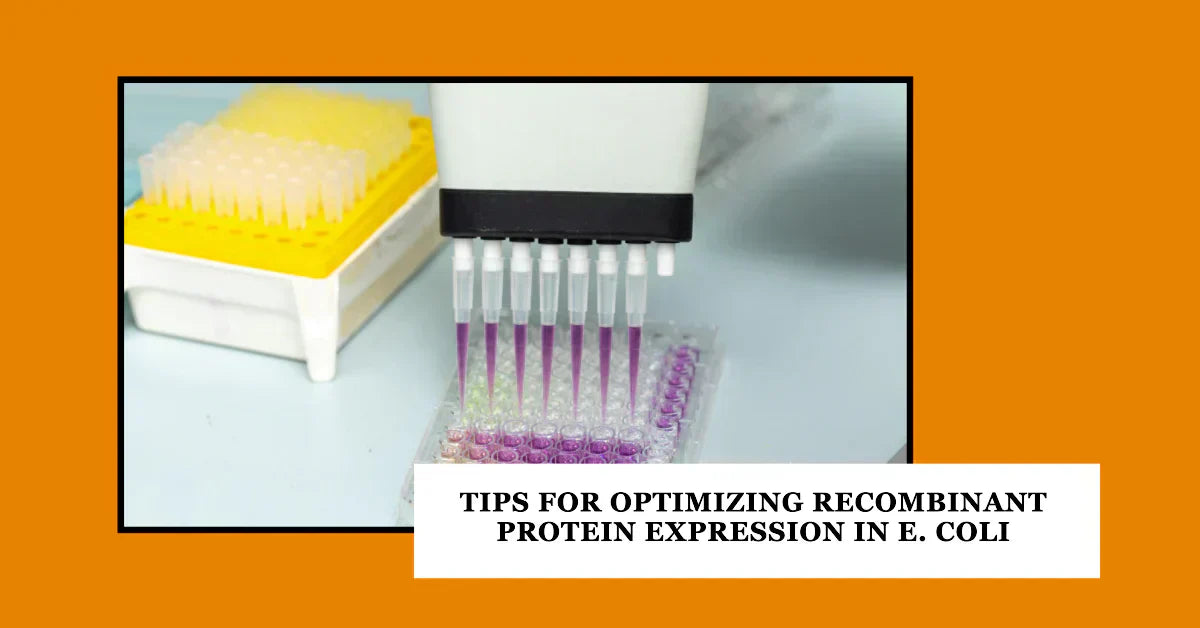
Recombinant protein production in Escherichia coli (E. coli) is fundamental to contemporary molecular biology and biotechnology. It enables scientists to manufacture specific proteins of interest for multiple uses, such as pharmaceutical development, structural biology, and functional investigations. Nonetheless, attaining substantial quantities of soluble and effective recombinant proteins in E. coli can be difficult.
This article will explore vital tips and techniques for refining recombinant protein production in E. coli.
Introduction to Recombinant Protein Expression in E. coli
Recombinant protein production involves using genetically modified organisms, such as E. coli, to generate a particular protein of interest. This procedure commonly includes inserting the gene that encodes the desired protein into an expression vector and inserting it into the host organism. Once inside the host cell, the protein is produced using the host's cellular machinery.
E. coli is a popular option for recombinant protein expression because of its rapid growth, well-known genetics, and economical cultivation. Nevertheless, various aspects can impact the effectiveness of protein expression in E. coli, including codon usage, protein degradation, and cellular stress responses.
Choose the Right Expression System
Picking the proper expression system is vital for effective protein production in E. coli. Two widespread systems are the T7-dependent system and the lac promoter-dependent system.
1. T7-Based System
The T7-based system is a commonly used approach for producing proteins in E. coli, providing substantial protein production capabilities. This method depends on the T7 RNA polymerase enzyme to initiate transcription and requires a host strain containing the T7 RNA polymerase gene. Although it is very effective, it's essential to recognize that this system can be harmful to specific proteins, underscoring the significance of fine-tuning protein expression when utilizing it.
Numerous important considerations become relevant when creating a vector for expressing genes in E. coli using the T7-based system. Codon optimization for E. coli is frequently used to boost translation effectiveness, guaranteeing that the host's machinery efficiently generates the target protein. Furthermore, meticulous promoter selection for E. coli expression is vital, as the selection of a promoter can significantly affect the levels and timing of expression.
Throughout the growth period, it's essential to carefully manage the fermentation conditions and protein expression efficiency to achieve the best results. Elements like temperature, acidity, air supply, and the level of the inducer must be adjusted precisely to attain the desired efficiency in producing proteins.
It's crucial to think about the restrictions of E. coli as a host for protein production since it might not possess the equipment for particular changes that some proteins need after translation. In such cases, you may need to investigate alternative systems or approaches for expressing proteins.
Picking a suitable E. coli host strain for protein expression is also vital, as distinct strains may have differing protein folding and stability abilities. Diagnosing problems with protein expression in E. coli may entail testing various host variants or utilizing helper molecules to aid in accurate protein folding.
After successfully generating the protein, subsequent stages, like the purification of recombinant proteins from E. coli, become crucial steps to get clean and functional proteins for assorted uses.

2. Lac Promoter-Based System
The Lac Promoter-Based System is another broadly applied approach for recombinant protein expression in E. coli, balancing effectiveness and compatibility with host cells. This method depends on the lac promoter, making it a fitting option for achieving moderate protein expression levels.
One of its noteworthy benefits is that it's usually less harmful to the host cell compared to other systems, which makes it especially appealing for expressing proteins that might be harmful.
When building a vector for expressing genes in E. coli using the Lac Promoter-Based System, you might still consider codon optimization for E. coli to boost translation effectiveness and overall protein expression performance. Selecting the expression vector for E. coli is crucial since it determines critical components like the promoter, selection marker, and any extra control elements required to attain the preferred protein expression levels.
Protein expression conditions are essential in this approach, and elements like temperature, inducer amount, and the composition of the growth medium need precise adjustment to attain the best protein expression efficiency. In contrast to a few other methods, the Lac Promoter-Based System's moderate expression levels can be beneficial when targeting correctly structured and operational proteins.
When selecting E. coli host strains for protein expression, it's essential to think about the specific needs of the protein. While this approach is typically less harmful, the choice of host strain can still impact the overall outcome of protein production.
Although this system is less likely to pose issues related to protein toxicity, it's important to remember that limited capability for post-translational modifications in E. coli may still be a concern for certain proteins. Additional methods or different expression systems may be needed to achieve the needed protein alterations.
Codon Optimization
Codon optimization is a pivotal strategy in recombinant protein expression in E. coli. The rationale behind this lies in the unique codon choices that E. coli has compared to organisms where genes are typically obtained. When using an E. coli system for protein production, it's vital to recognize this difference and take action to adapt the gene sequence to E. coli's favored codon usage.
In the process of protein expression optimization, codon optimization for E. coli entails carefully modifying the gene sequence to match the host's codon preferences. By doing this, the translation machinery in the E. coli host can effectively and precisely create the protein, significantly boosting protein expression efficiency.

Optimize Growth Conditions
Cultivation conditions significantly affect protein expression. Some factors to consider include:
1. Temperature
Temperature is a crucial element in optimizing protein expression in the E. coli protein expression system. By carefully adjusting the host cells' growing temperature, which might involve lowering it from the standard 37°C to around 30°C, several desirable outcomes can be achieved. This is especially beneficial for producing recombinant proteins and downstream applications like ELISA kits, peptide synthesis, and gene synthesis.
One of the key benefits of reducing the growth temperature is its positive influence on protein solubility. Lower temperatures create a more favorable environment for proteins to maintain their natural shape and remain dissolved instead of forming solid clumps called inclusion bodies.
This is especially advantageous when aiming to produce soluble and biologically active proteins, as seen in applications like antibody sequencing and custom antibody development.
2. Induction Time
Induction timing is a vital factor in refining protein expression, especially in the E. coli protein production system. The moment when induction occurs is a sensitive equilibrium because it can substantially impact the success of various applications, such as ELISA kits, peptide synthesis, gene synthesis, antibody sequencing, custom antibody production, and the effectiveness of protein expression and production services.
Carefully picking the induction time is crucial since it can affect different stages of protein production. If induction happens too soon, it can result in various problems, including protein degradation.
Proteins might fold incorrectly, aggregate in inclusion bodies, or become vulnerable to proteases, leading to lower yields and decreased protein quality. This can negatively affect applications like antibody production and peptide synthesis, which rely on high-quality recombinant proteins.
Fusion Tags and Affinity Purification
The use of fusion tags enables the application of purification techniques based on affinity chromatography, considerably simplifying the separation of the desired protein from complex cell extracts.
This method is beneficial for applications involving ELISA Kit manufacturers, protein synthesis companies, and protein production companies, as it simplifies the production of high-quality proteins for later use in diagnostics or research.

Prevent Protein Aggregation
Protein aggregation is a common issue in E. coli expression. To avoid aggregation:
1. Chaperone Co-expression
Using chaperones alongside the protein is a highly advantageous approach in recombinant protein production, offering benefits relevant to various applications like ELISA test kits, recombinant antibody production, custom antibody service, custom antibody production, and peptide synthesis service.
Co-expressing molecular chaperones, like GroEL-GroES, with the desired protein can bring several crucial advantages.
2. Lower Induction Temperature
Lowering the cultivation temperature from the usual 37°C to a cooler temperature, like 30°C, establishes a better setting for appropriate protein folding and construction. At cooler temperatures, protein misfolding decreases, giving the newly formed polypeptide chains additional time to adopt their accurate structure.
This lessens the chance of improper folding, frequently leading to protein aggregation.
Monitor Protein Expression
Tracking protein production while creating recombinant proteins in E. coli is a crucial stage that applies to various uses.
Using switchable promoters to manage protein production levels and employing various tracking methods, such as SDS-PAGE, western blotting, or fluorescence tests, ensures ideal timing and output in protein production endeavors.
Switchable promoters offer precise control over when and how much protein is produced. This is especially beneficial in applications involving protein expression and production services, where strict control of protein levels is necessary to achieve the desired amount and quality.
SDS-PAGE, which stands for Sodium Dodecyl Sulfate Polyacrylamide Gel Electrophoresis, is a widely used method for tracking protein production. It allows scientists to see if proteins are present, their size, and how much is in a sample. This method is beneficial in fields such as protein production companies and protein synthesis companies for checking the progress of protein creation.
Western blotting, a complementary technique to SDS-PAGE, allows for the specific identification of target proteins. It is especially valuable in fields like ELISA Kit manufacturers, where knowing which protein is produced and how much is crucial for creating diagnostic tests.
Optimize Cell Disruption and Harvesting
Firstly, when choosing the right approach for breaking open cells, it's crucial to consider the specific needs of your protein recovery process. Each method has pros and cons, and picking the most appropriate one depends on factors like cell type, the kind of protein you want, and the next steps in processing.
Furthermore, achieving the best results requires handling cells and the disrupted material with care throughout the process. Proper handling is crucial to prevent the damage or breakdown of the target proteins. This means maintaining the right temperature, pH, and buffer conditions and using methods to limit exposure to oxygen, which can harm the proteins.
Also, keeping an eye on peptide synthesis costs and being aware of what various peptide synthesis companies offer can be helpful in protein recovery. Some proteins may need custom-made peptides or synthetic materials in later steps, and having access to cost-effective and dependable sources for these materials is essential for making the protein recovery process as efficient as possible.
High-pressure homogenization compels the cell mixture through a tight opening at substantial pressure, prompting cell breakdown. It is a flexible method suitable for purposes like ELISA kit manufacturing, where dependable and effective protein retrieval is necessary.
Appropriate handling and regulation of these cell breakdown techniques are critical to prevent protein deterioration, which may transpire if excessive power or shear is applied during the procedure. The delicate and monitored breakdown is particularly crucial in businesses like antibody sequencing companies, where the integrity of the obtained proteins is paramount.
Purification Strategies
The purification of proteins is a crucial stage in biotechnology and biochemical research, and selecting a proper purification approach is central to getting pure protein samples. Features of proteins, like size, electric charge, water-repelling tendencies, and affinity for particular molecules, should guide the choice of the most fitting purification method.
Frequently used methods involve various filtering procedures, including affinity purification, ion exchange purification, and size separation purification.
Quality Control
Conduct checks to evaluate protein purity, efficiency, and durability. These evaluations involve mass spectrometry, circular dichroism, and practical assessments based on your protein's characteristics.
Storage and Handling
Correctly preserve and manage purified proteins. Proteins can be sensitive to heat, acidity, and other environmental factors. Freeze-dry, divide, and keep proteins under the suggested conditions to keep them stable.
Conclusion
Improving recombinant protein production in E. coli is a complex procedure that demands thoughtful preparation and testing. By choosing the correct expression system, refining growth conditions, and using diverse approaches to stop aggregation and enhance purification, scientists can enhance the likelihood of obtaining large amounts of soluble and functional recombinant proteins.
Ongoing monitoring, quality assessment, and proper storage are also crucial to ensuring the success of your protein production project. Mastering these methods can push progress in medical and biotechnology research, enabling the investigation and creation of innovative therapeutic proteins and biomolecules.