
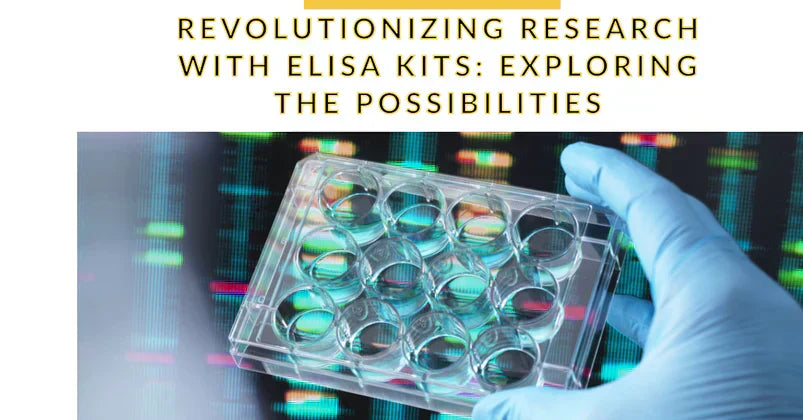
Technological developments strongly influence progress in the ever-changing field of scientific investigation.
Enzyme-Linked Immunosorbent Assay (ELISA) kits have become influential instruments, transforming how researchers conduct experiments and analyze biological samples.
This piece delves into the realm of ELISA kits, examining their uses, advantages, and the transformative effects they have had on different research areas.

Understanding ELISA Kits: A Brief Overview
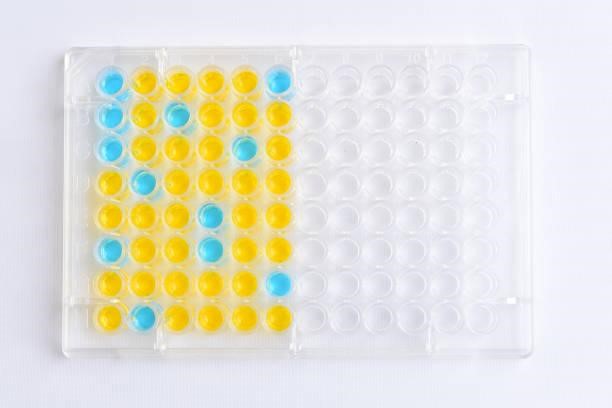
ELISA, short for Enzyme-Linked Immunosorbent Assay, is a revolutionary research tool extensively used in diverse scientific fields, especially biomedical research. This method is crucial in advancing our comprehension of proteins, peptides, antibodies, and hormones by allowing accurate detection and quantification. The adaptability and versatility of ELISA kits have rendered them essential in contemporary laboratory studies, substantially contributing to research advancements and discoveries.
The central concept of ELISA centers on the interplay between an enzyme and a substrate, leading to the generation of a quantifiable signal. This interplay establishes the foundation for various ELISA kit formats customized to specific research needs. The formats encompass direct, indirect, sandwich, and competitive assays, giving researchers multiple choices to match their experimental needs.
ELISA kits are now linked with state-of-the-art research tools, propelling innovation in molecular biology. The technology underpinning ELISA kits has progressed, creating highly sensitive and precise assays that meet the complex requirements of contemporary scientific inquiries. This ongoing progression in ELISA kit technology has markedly contributed to the effectiveness and precision of experimental results in laboratories across the globe.
The ongoing improvement and innovation in ELISA kit development mirror the dedication of the scientific community to expand the limits of knowledge. Scientists worldwide depend on the accuracy and consistency provided by ELISA kits to reveal fresh perspectives on cellular and molecular processes, contributing to the continually growing collection of scientific knowledge.
Applications Across Disciplines
1. Immunology and Infectious Diseases
In the evolving realm of immunology, ELISA kits have become crucial research instruments, transforming how researchers explore and comprehend the immune system's responses. Built on advanced ELISA kit technology, these kits are essential in identifying and measuring antibodies and antigens, which are vital in examining infectious diseases.
Researchers studying infectious diseases regularly use ELISA tests to distinguish and quantify pathogens or antibodies in patient samples. The precision and specificity of ELISA technology allow accurate detection of infectious agents, playing a substantial role in accurately diagnosing infections. This diagnostic ability is especially vital in healthcare settings, where swift and dependable identification of pathogens is essential for efficient patient care.
The varied uses of ELISA kits in immunology highlight their function in promoting biomedical research. Providing a straightforward and practical approach for scrutinizing immune responses, ELISA tests contribute to the ongoing advancement of our comprehension of infectious diseases and the immune system. This convergence of scientific research and ELISA technology demonstrates the mutually beneficial connection between inventive research advances and the development of ELISA as an essential laboratory method.
The merits of ELISA kit applications in immunology are clear not only in diagnosis and treatment, but also in aiding innovative findings. The benefits of utilizing ELISA technology, like its flexibility with different sample types and its ability to handle a large volume of samples, have placed it at the forefront of lab investigations in immunology.

2. Oncology Research
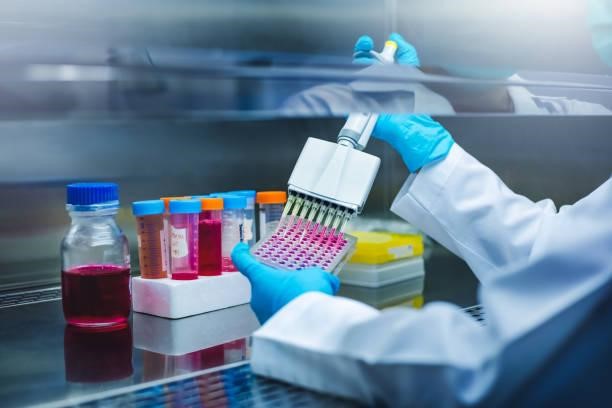
In the vast field of cancer research, the importance of ELISA kits cannot be exaggerated, as they have become essential instruments to comprehend and fight different types of cancer. These sophisticated research instruments play a vital role in recognizing biomarkers linked to various cancer types, providing researchers with a valuable understanding of the complex molecular terrain of oncogenesis.
ELISA kits in cancer research are especially crucial in measuring particular proteins or antigens found in patient samples. This method lets researchers untangle the intricacies of cancer progression, giving a detailed molecular profile that assists in prognosis and treatment choices. The capability to measure these biomarkers accurately allows for a thorough grasp of the disease dynamics, facilitating the creation of focused and personalized therapeutic approaches.
Additionally, integrating ELISA kits in cancer research has dramatically simplified the procedure of discovering and confirming biomarkers. These kits offer a dependable and high-capacity technique for examining patient samples, speeding up the rate at which researchers can recognize and confirm possible biomarkers. This effectiveness is crucial in transforming research discoveries into practical clinical uses, ultimately aiding patients through enhanced diagnostic and therapeutic methods.
In the broader scope of cancer investigation, extra technologies like peptide synthesis and gene synthesis supplement the offerings of ELISA kits.

3. Neuroscience and Neurological Disorders
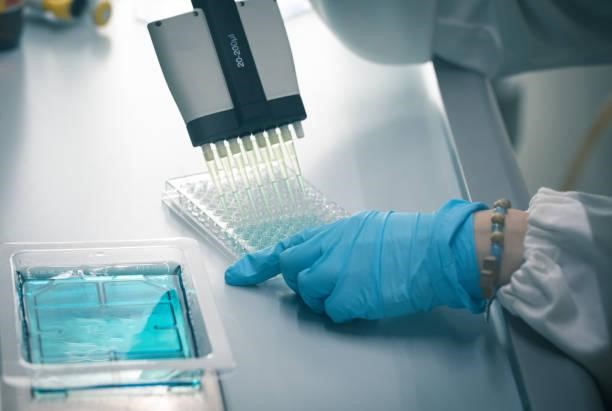
In the complex field of brain science and brain-related disorders, using ELISA kits emerges as a transformative power. It gives researchers a valuable understanding of the molecular foundations of conditions like Alzheimer's disease, Parkinson's disease, and multiple sclerosis. These sophisticated research tools play a central role in untangling the intricacies of brain-related disorders, contributing to diagnostic improvements and creating focused therapeutic interventions.
In brain science, researchers use the accuracy and sensitivity of ELISA tests to identify and measure particular proteins linked to neurological disorders. The capability to measure these biomarkers in patient samples offers an insightful view of the molecular alterations happening in conditions like Alzheimer's. By clarifying the functions of these proteins, researchers can acquire a more profound grasp of disease mechanisms, opening the path for more precise and efficient interventions.
The role of ELISA kits in brain science goes beyond deciphering disease mechanisms. These kits have a vital function in creating tools for diagnosis that assist in the prompt and precise recognition of neurological disorders. Early detection is crucial in brain-related illnesses, enabling prompt intervention and management plans and potentially enhancing patient outcomes and quality of life.
Advantages of ELISA Kits in Research
1. High Sensitivity and Specificity
One of the standout characteristics that positions ELISA test kits at the forefront of lab methods is their outstanding blend of heightened sensitivity and specificity. These kits excel in spotting target substances even at extremely low levels, a quality that proves priceless in situations where accuracy is crucial. The capacity to recognize tiny amounts of biomolecules boosts the precision and dependability of experimental outcomes, emphasizing the crucial function of ELISA testing kits in numerous research pursuits.
Furthermore, the precision ingrained in ELISA testing kits guarantees that researchers acquire outcomes with substantial certainty. This precision lessens the incidence of false positives or negatives, a crucial consideration in experimental planning and data interpretation. The accuracy provided by ELISA technology is a primary element in its extensive acceptance across varied scientific fields, encompassing, but not restricted to, immunology, oncology, brain science, and infectious diseases.
In conjunction with the advances in ELISA kit technology, additional services have appeared to enhance research capacities. These services cover a wide range, such as recombinant antibody production. Moreover, the accessibility of custom peptide synthesis and custom gene synthesis further broadens the assortment of tools researchers can utilize in their scientific inquiries.
The joint endeavors of different entities, encompassing ELISA kit manufacturers and protein synthesis companies, contribute to developing lab approaches. The cooperation among these entities promotes a setting where state-of-the-art technologies and services consistently boost scientific research accuracy, effectiveness, and range.

2. Quantitative Analysis
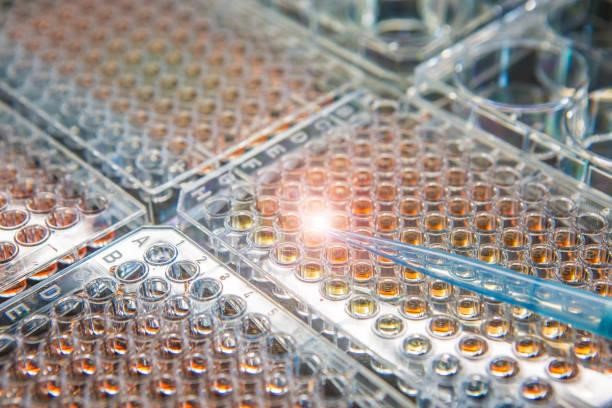
In biochemical analysis, the quantitative strength of ELISA testing kits stands as a foundation, enabling researchers to gauge the amount of particular substances in a provided sample. This quantitative characteristic is crucial for grasping the complex dynamics of biological processes, evaluating the intensity of illnesses, and thoroughly observing the impacts of experimental interventions. The correctness and replicability ingrained in ELISA tests make them priceless instruments for generating insights that push scientific revelations.
The dependability and accuracy of quantitative information acquired through ELISA tests are vital in translational research, where discoveries at the lab bench are changed into clinical uses. This measurable data assists healthcare providers in making knowledgeable choices about patient care, treatment approaches, and therapeutic actions. The measurable facet of ELISA technology is crucial in connecting the divide between fundamental research and its real-world uses in healthcare environments.
As researchers explore the measurable aspects of their studies, including diverse services enhances ELISA testing kits' capacities. Offerings like recombinant antibody production add extra layers of complexity to quantitative examinations. These offerings, frequently provided by specialized entities like ELISA kit producers, protein synthesis firms, and antibody sequencing firms, collaborate with ELISA technology to supply a complete toolkit for researchers.
Challenges and Considerations in ELISA-based Research
While using ELISA kits gives researchers a strong foundation for different uses, it is crucial to recognize and deal with specific difficulties and factors inherent in their use. Among these factors, a notable challenge is the chance of cross-reactivity, a situation where antibodies might accidentally interact with non-target substances, causing inaccurate and misleading outcomes.
This challenge emphasizes the significance of applying thorough validation procedures and including suitable controls in experimental plans to reduce the risk of cross-reactivity and maintain the dependability of the produced data.
Tailored antibodies, accurately designed to decrease cross-reactivity, are crucial in improving the accuracy and specificity of ELISA-based experiments.
Another aspect of ELISA-oriented research is the chance of outcome differences because of factors like variations in sample management, reagent preparation, and test situations. Uniformity and strict procedures become essential in lessening these sources of diversity. Also, including checks on quality and internal benchmarks can boost the reproducibility of outcomes throughout experiments and laboratories.
Future Perspectives: Innovations in ELISA Technology
The domain of ELISA technology is ready for thrilling advances as researchers and scientists welcome innovations to tackle current constraints and push the field ahead. The course of ELISA research is defined by a persistent chase of speed, discernment, and mechanization enhancements, reflecting the more extensive patterns in the always-changing realm of biomedical sciences.
One path of innovation that holds significant potential is the creation of microfluidic ELISA systems. These state-of-the-art systems signify a fundamental change, providing researchers with the capacity to perform ELISA tests with unparalleled efficiency and accuracy.
By using microfluidic technologies, these systems allow the examination of minimal sample sizes, lowering reagent use and speeding up experimental procedures. This advancement aligns with the aim of making ELISA tests more resource-effective while maintaining or enhancing their analytical capabilities.
The inclusion of microfluidic ELISA into research procedures has the potential to transform how researchers undertake experiments, especially in areas like immune system studies, cancer research, and brain science. The capability to conduct high-capacity analyses with smaller sample sizes not only preserves valuable biological samples but also creates possibilities for more extensive screening and profiling investigations.
This advancement aligns with the increasing need for technologies that allow researchers to obtain comprehensive data from limited sample amounts.
Alongside progressions in ELISA setups, new approaches in antibody creation and personalized antibody offerings are crucial in boosting the specificity and sensitivity of ELISA tests. Tailored antibodies, crafted with accuracy through offerings given by focused entities, help reduce cross-reactivity and enhance the overall effectiveness of ELISA trials.
Collaborations with respected protein production companies are essential to guarantee that researchers have access to state-of-the-art substances that match developing ELISA methods.
Moreover, the inclusion of automation into ELISA workflows is a vital domain of investigation. Automated ELISA systems aim to simplify processes, diminish hands-on time, and boost reproducibility across experiments. The addition of automation is notably advantageous in high-throughput settings, where examining numerous samples requires efficiency without compromising data quality.
Looking forward, the convergence of ELISA technology with other inventive areas, such as peptide synthesis, is expected to unlock new horizons in experimental design. The accessibility of advanced technologies in peptide synthesis companies, combined with the ongoing development of ELISA platforms, generates opportunities for researchers to create experiments with customized peptides, broadening the range of ELISA applications.
Conclusion
The introduction of ELISA kits has unquestionably transformed the field of scientific investigation. From immune system studies to drug research, these kits have become essential instruments, giving researchers the power to identify and measure specific substances accurately. The benefits of ELISA kits, including their responsiveness, quantitative capabilities, and adaptability, have established them as a foundation in labs globally.
Despite the difficulties linked with ELISA-focused research, ongoing innovations and technological enhancements are addressing these challenges and broadening the capacities of traditional ELISA examinations. As we gaze into the future, the sustained merging of ELISA with emerging technologies holds the potential for even more significant advancements in research methods and results.